View Real World Examples
ASCAND gives makers an approachable path from a physical object to a downloadable 3D model. Capture a suitable object with the smartphone you already own, upload the recording through your browser, and continue working with the processed model in your preferred 3D workflow.
Use the result as a starting point for repair, adaptation, creative modification, digital preservation or 3D printing.
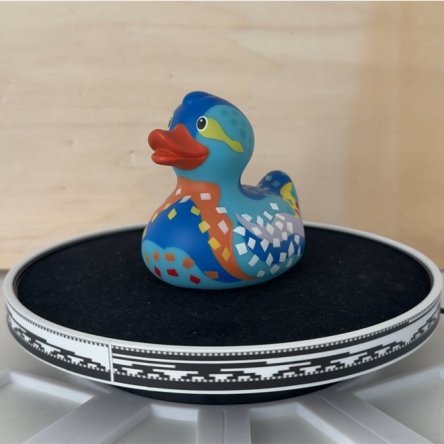
This scan video was captured at the Bay Area Maker Faire in California to test the color correctness of ASCAND VISION scans.
Despite being processed at Standard Resolution, the scan accurately preserves all the colors of the original. The resulting watertight mesh is ready for 3D printing—though depending on your printer, adding supports may be recommended for optimal results.
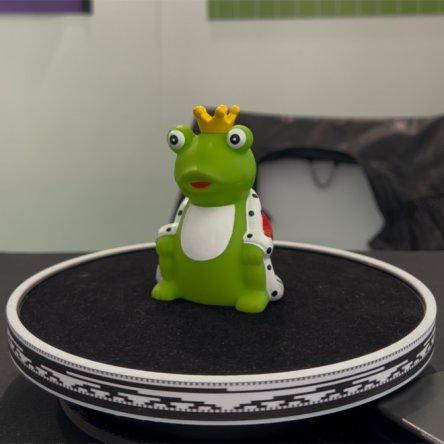
This scan video was captured at the a Maker Faire in Rome with no backdrop, where some booth other objects were visible in the background. However, during processing, all distractions were seamlessly removed.
Despite being processed at Standard Resolution, the scan accurately preserves all the fine details of the original, with no unwanted artifacts. The resulting watertight mesh is ready for 3D printing—though depending on your printer, adding supports may be recommended for optimal results.
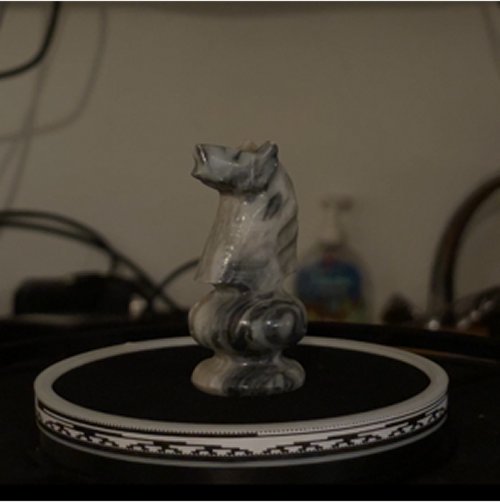
This scan video captures a small, glossy marble chess knight on an ASCAND Mini Table, set against a busy background. Measuring just 26mm (1”) in diameter—half the size of a golf ball—its reflective surface makes it a challenge for both photogrammetry and laser-based 3D scanners.
Despite being processed at Standard Resolution, the scan accurately preserves all the fine details of the original, with no unwanted artifacts. The resulting watertight mesh is ready for 3D printing—though depending on your printer, adding supports may be recommended for optimal results.
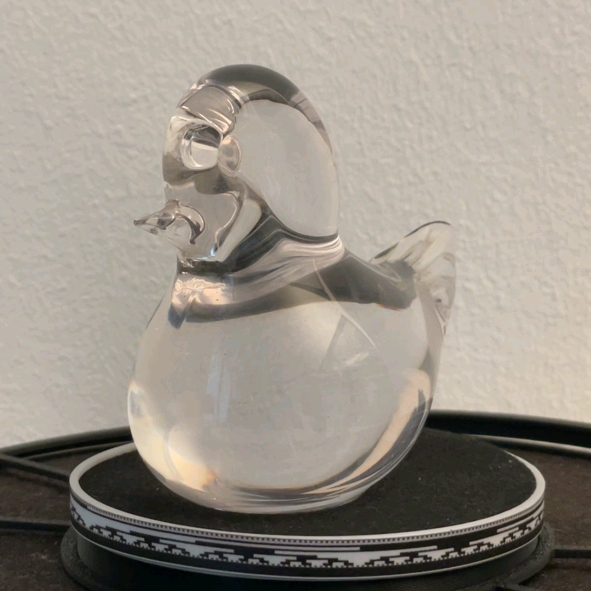
This 3D scan video takes the challenge even further—combining TINY size with the toughest scanning material: Glass. To push the limits of what’s possible.
This Point Cloud was processed at Standard Resolution using the ASCAND platform. The point cloud as well as the crisp water tight mesh – even at a miniature scale – can be downloaded below.
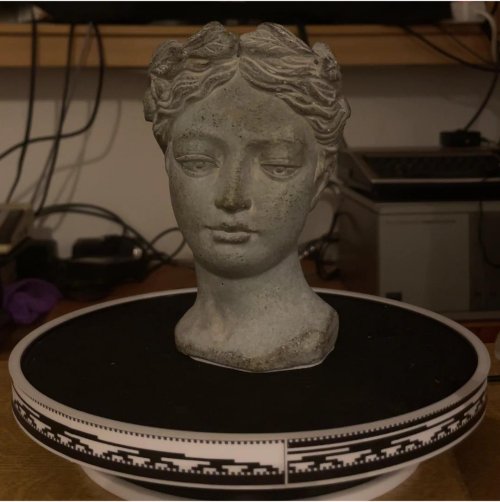
This scan video was captured in a basement workshop with no backdrop, where legacy computers and other objects were visible in the background. However, during processing, all distractions were seamlessly removed.
Despite the lack of a uniform background, the scan—processed with a Laser at Detail Resolution—produced clean edges with no outliers or holes, demonstrating ASCAND’s ability to deliver high-quality results even in less-than-ideal conditions.
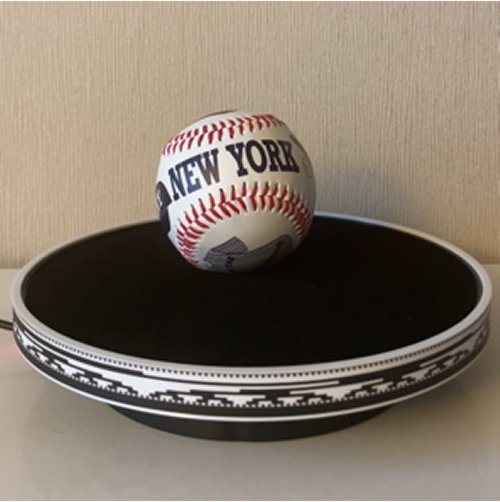
This scan video of a New York baseball was used to test ASCAND’s dimensional accuracy and performance on featureless objects.
The resulting Point Cloud captures even subtle details, including slight dimensional distortions where the red seam is visible. The text on the ball remains sharp and readable, and the overall size falls within the expected 2% tolerance, demonstrating ASCAND’s precision in scanning smooth, low-feature surfaces.
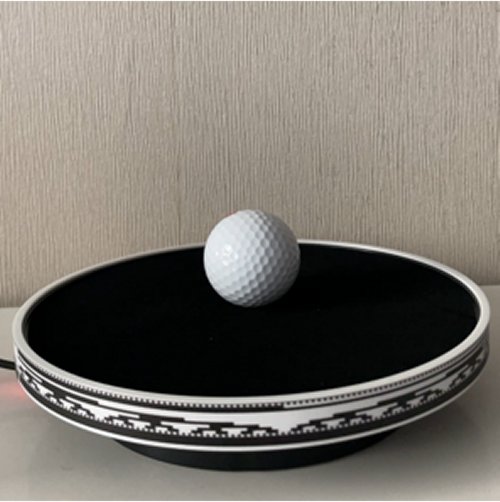
This scan video was captured in a hotel room in New York City, testing ASCAND’s ability to scan small, “featureless” objects. At just 1.68” (42.67 mm) in diameter, a golf ball presents a significant challenge for traditional photogrammetry, which struggles without distinct surface features.
The scan produced crisp edges and a highly detailed structure, with clear, readable text. For even finer surface details, integrating a laser module would enhance the scan, capturing even the most subtle textures.
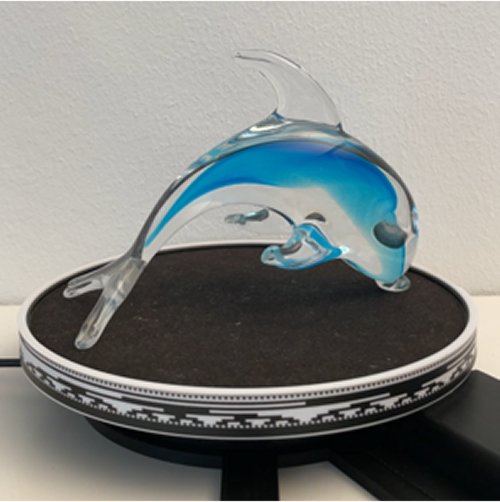
A glass figurine is the ultimate challenge for any 3D scanner—whether photogrammetry or laser-based. Traditionally, capturing transparent objects requires prohibitively slow and expensive contact 3D scanning.
Yet, even at Standard Resolution, ASCAND delivers an impressive result: crisp edges, accurate colors, no outliers, and no unwanted artifacts—proving that high-quality glass scans are possible without complex or costly equipment.
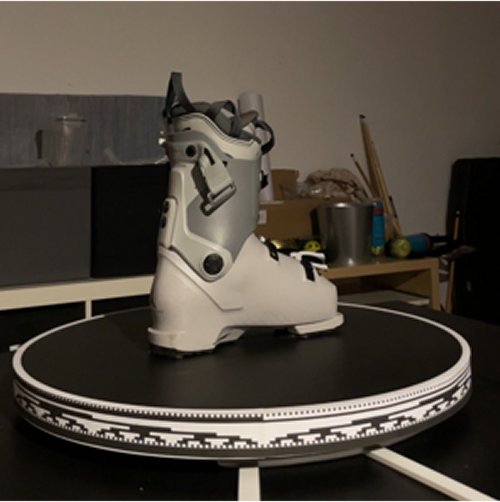
Captured on a MAX60 turntable (600mm / 23.6”) in a basement workshop with a cluttered background, this scan video demonstrates ASCAND’s ability to process complex environments effortlessly.
Despite the busy surroundings, the resulting 3D model is clean, artifact-free, and unaffected by background noise. It delivers a color-accurate, outlier-free mesh with exceptional quality—ready for any application.
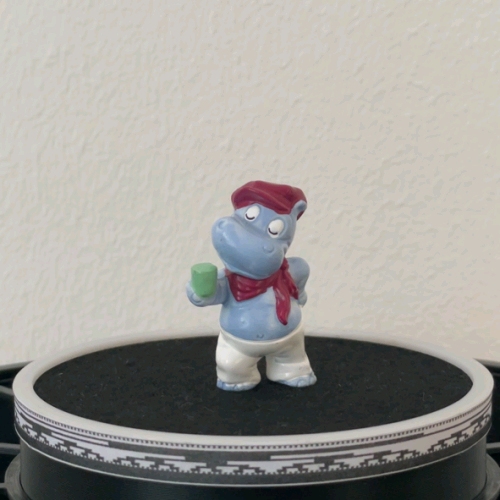
This scan video was captured at the 2024 Maker Faire in the Bay Area using a Mini ASCAND setup. The tiny hippo, originally from a Kinder Chocolate Egg, measures just 20mm (1”) in diameter and has a glossy finish—making it a challenging subject for 3D scanning.
Despite its small size and reflective surface, Standard Resolution was sufficient to produce a detailed, high-quality 3D model, demonstrating ASCAND’s ability to handle even the toughest scanning conditions with ease.